All-New Course for Neuro PTs & OTs:
Practical Vision Therapy for Neurologic Conditions
How Neuro Clinicians Can Confidently Screen, Identify, and Treat Visual Impairments That Directly Impact Function
If you work with neurologic patients, you already know this truth:
👉 Vision problems quietly derail progress.
They affect balance.
They slow mobility.
They disrupt self-care.
They limit safety and participation.
And yet - visual deficits are often under-screened, misunderstood, or misattributed in neuro rehab.
Patients struggle with navigation.
They miss objects on one side.
They bump into doorframes.
They appear inattentive, unsafe, or “noncompliant.”
But the real issue isn’t behavior - it’s vision.
Here’s the problem…
Even experienced clinicians often feel unsure about:
- What visual impairments they should be screening for
- How to tell the difference between visual field loss and spatial neglect
- When something is a red flag that needs referral
- How vision deficits actually impact gait, balance, ADLs, and participation
- What interventions are within their scope - and which require collaboration
- How to turn vision findings into functional, meaningful treatment plans
If that sounds familiar, you’re not alone.
And it’s exactly why we created this course.
Introducing...
Practical Vision Therapy for Neurologic Conditions: Clinical Decision-Making and Treatment Planning
A 6-module course designed to give neuro PTs and OTs a clear, practical framework for addressing visual deficits in neurologic rehabilitation.
Whether you’re new to vision rehab or you’ve avoided it because it felt overwhelming or outside your comfort zone, this course will give you confidence, structure, and immediately applicable strategies.
WITH 6.5 CONTACT HOURS
WHAT'S INSIDE THIS MINI COURSE?
Lesson 1: Foundations of Vision Therapy
Build a strong, practical foundation for understanding vision in neurologic rehab.
You’ll learn:
- Key visual systems involved in movement and function
- How visual deficits influence mobility, balance, and participation
- When vision should be part of your clinical reasoning (spoiler: often)

Lesson 2: Vision Rehabilitation Procedures & Clinical Applications
Learn how to screen for visual impairments in a way that’s realistic for busy clinics.
You’ll walk through:
- Evidence-based vision screening processes
- Oculomotor and visual-motor assessment techniques
- How to identify red flags and determine next steps

Lesson 3: Unilateral Spatial Neglect: What It Is and Why It Matters
Neglect is often missed - and when it is, progress stalls.
This module helps you:
- Understand the clinical presentation of neglect
- Recognize how it differs from visual field loss
- Identify how neglect impacts safety, mobility, and independence

Lesson 4: Unilateral Spatial Neglect: PT & OT Perspectives
See how PTs and OTs approach neglect differently - and together.
You’ll explore:
- Discipline-specific treatment strategies
- Functional task analysis through both mobility and occupational lenses
- How interdisciplinary collaboration improves outcomes

Lesson 5: Understanding Central Vision Impairment
Central vision issues affect reading, object interaction, and fine motor tasks - but they’re often overlooked.
In this module, you’ll learn:
- How central vision impairments present clinically
- How they impact daily activities and participation
- Strategies to support function through adaptation and retraining

Lesson 6: Hemianopsia: Impact on Occupational Performance & How You Can Help
Hemianopsia changes how patients move through the world.
You’ll learn:
- How visual field loss affects navigation, safety, and ADLs
- Practical intervention strategies including visual scanning and environmental adaptation
- How to integrate vision strategies into everyday functional tasks

TRULY A NON-TRADITIONAL EDUCATION MODEL THAT FITS YOU! IT'S A NO-BRAINER!
BY THE END OF THIS COURSE, YOU’LL BE ABLE TO…
✔ Analyze how visual and perceptual deficits impact mobility, task performance, and participation
✔ Differentiate visual field loss vs spatial neglect through observation and assessment
✔ Design and implement a vision screening process using evidence-based tools
✔ Apply treatment strategies that improve visual attention, perception, and spatial awareness
✔ Integrate interdisciplinary findings into cohesive plans of care
✔ Build functional, evidence-based treatment plans using scanning, adaptation, and task-specific retraining
This isn’t just about knowing more - it’s about treating better.
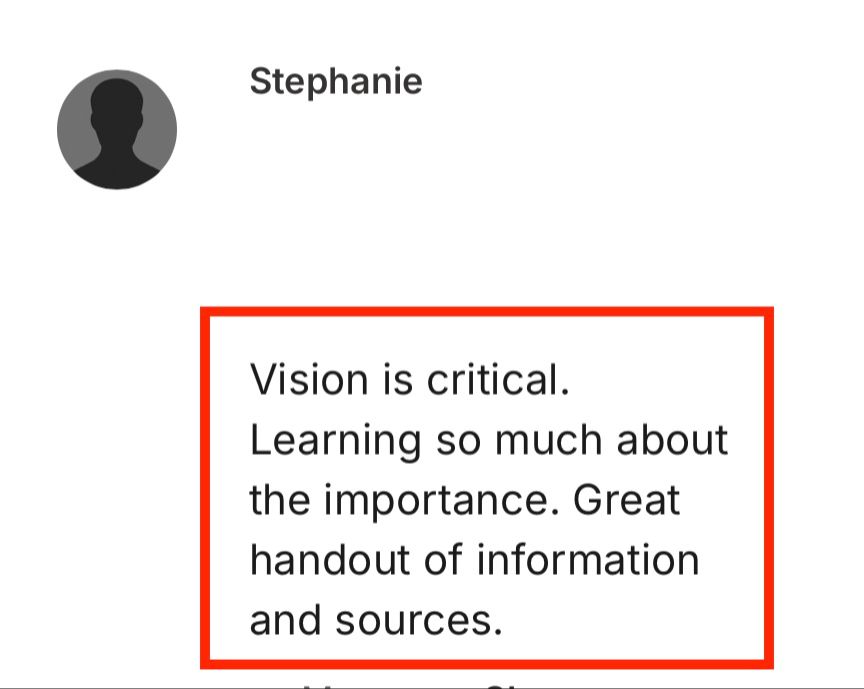
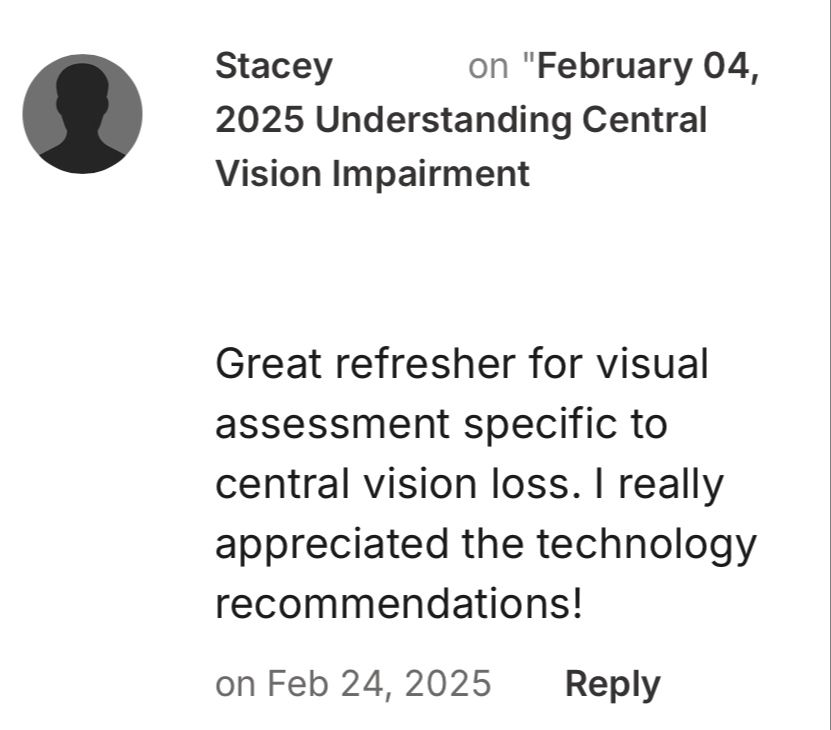
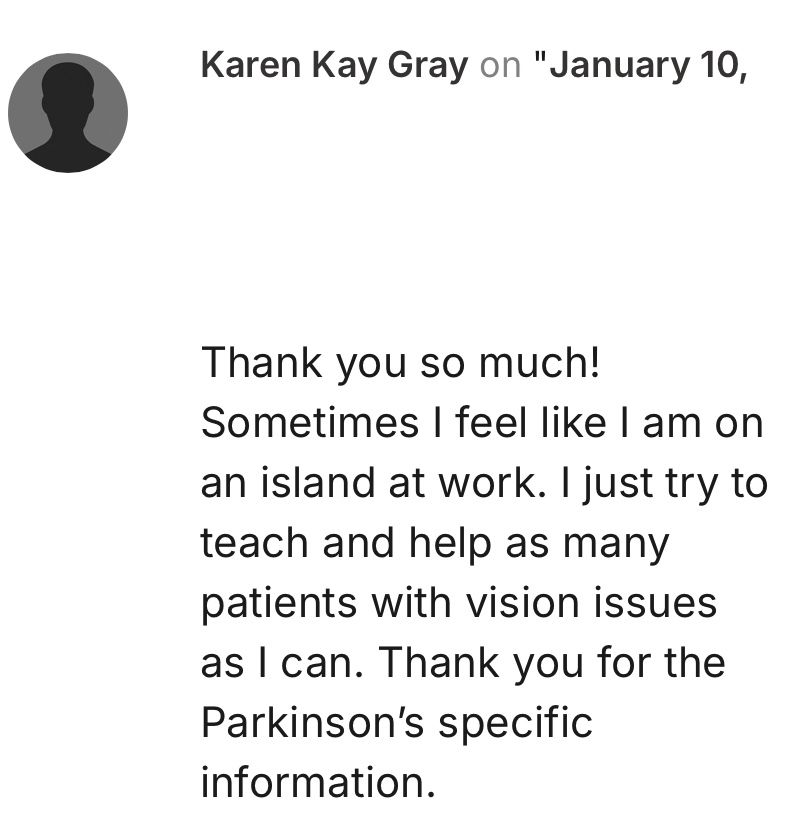
AND HERE'S WHAT PARTICIPANTS ARE SAYING...